

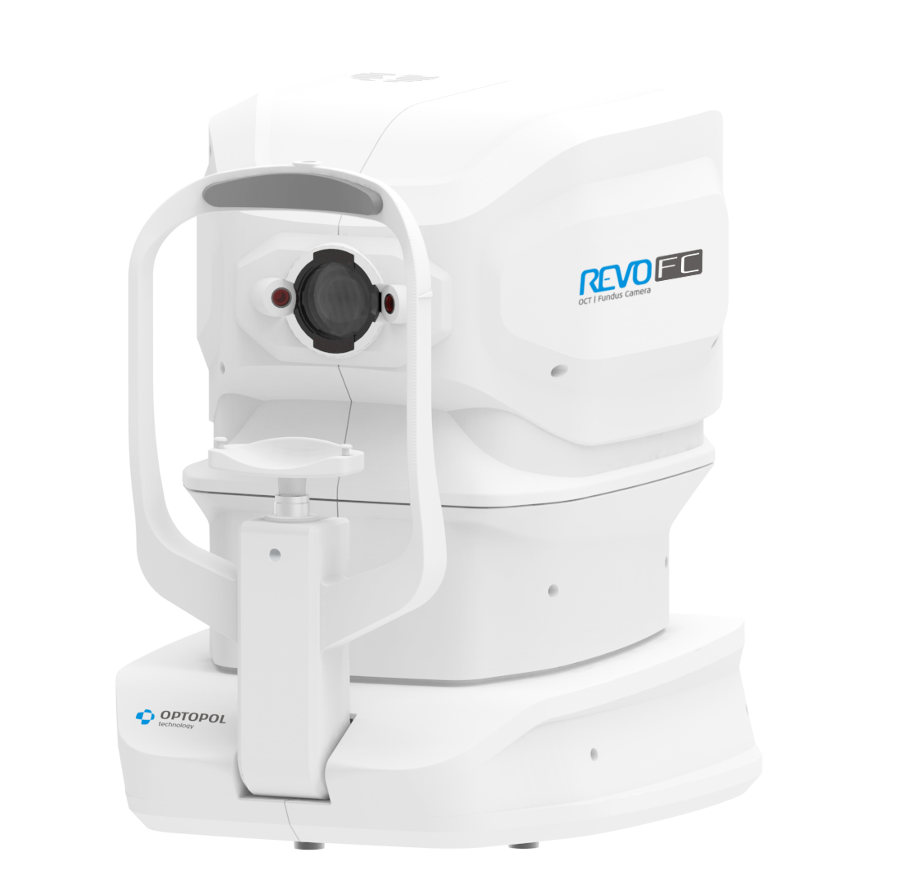
OPTICAL COHERENCE TOMOGRAPHY (OCT)
At Carterton Opticians, we believe prevention is better than cure. To help detect eye disease earlier we have invested heavily in new technology.
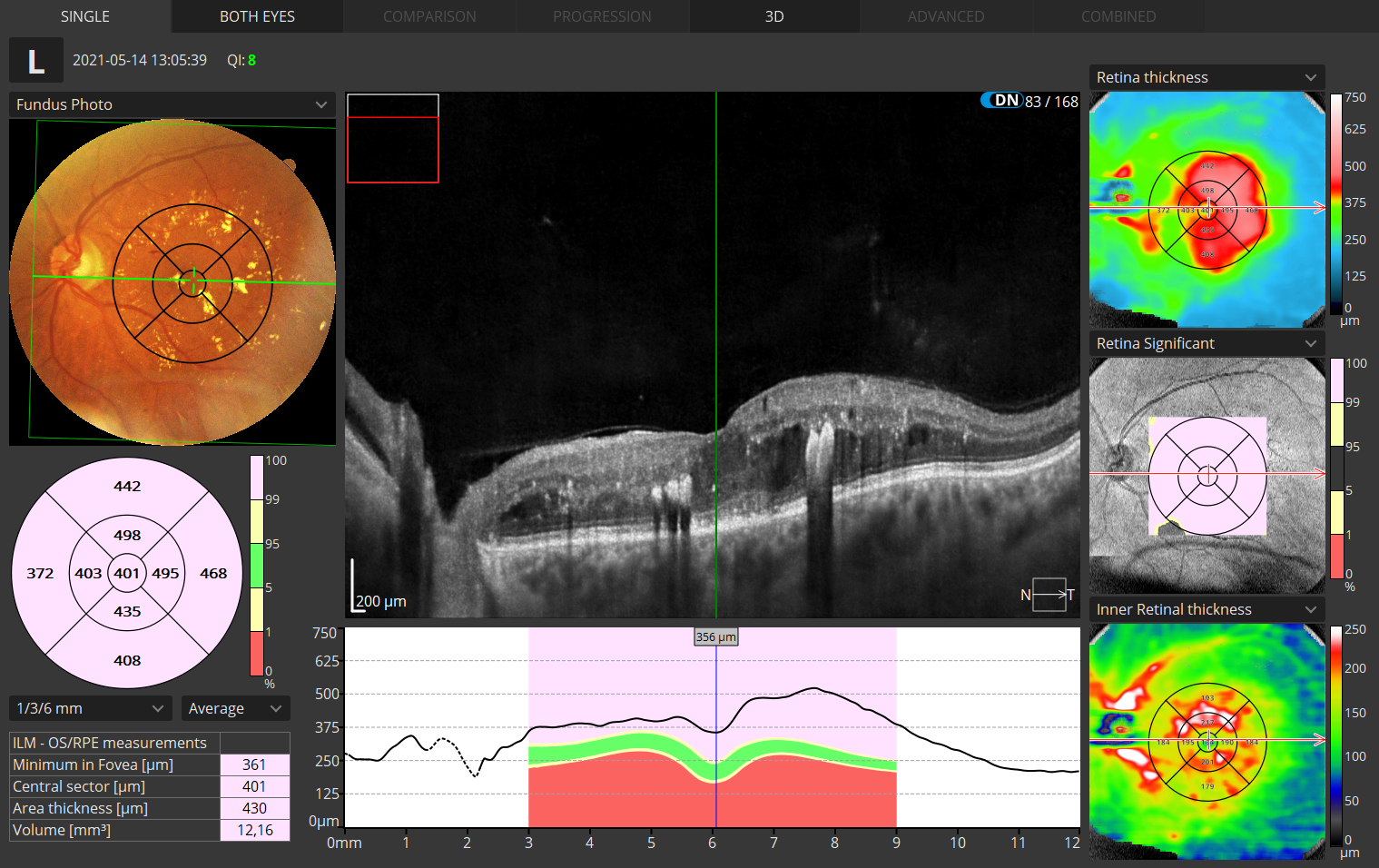
If you compare the back of the eye to a cake, when we look at the back of the eye it is like looking at the icing of the cake. It may all look tidy and neat but we can’t tell if underneath it’s a chocolate or sponge, if it has cream or jam. Similarly when looking at the retina we can’t tell if there are any problems underneath. Obviously with a cake we can take a slice and soon find out but with the eye having a pain free way to examine the different layers can be invaluable for detecting the early signs of disease. OCT can help detect diseases such as glaucoma up to 4 years before we can with tradition methods such as measuring eye pressures or doing visual fields. It also makes diagnosing conditions such as wet Age Related Macula Degeneration, epiretinal membranes and macula holes much easier.
We encourage all our patients to get a scan
To help patients we are keeping the price of an initial scan as low as possible at only £20.00 (£40 when combined with the ultrawide imaging). This initial scan will give us a baseline reference point. Having a scan at every sight test will allow us to compare back to previous scans, meaning we can reassure you that there is nothing deteriorating.
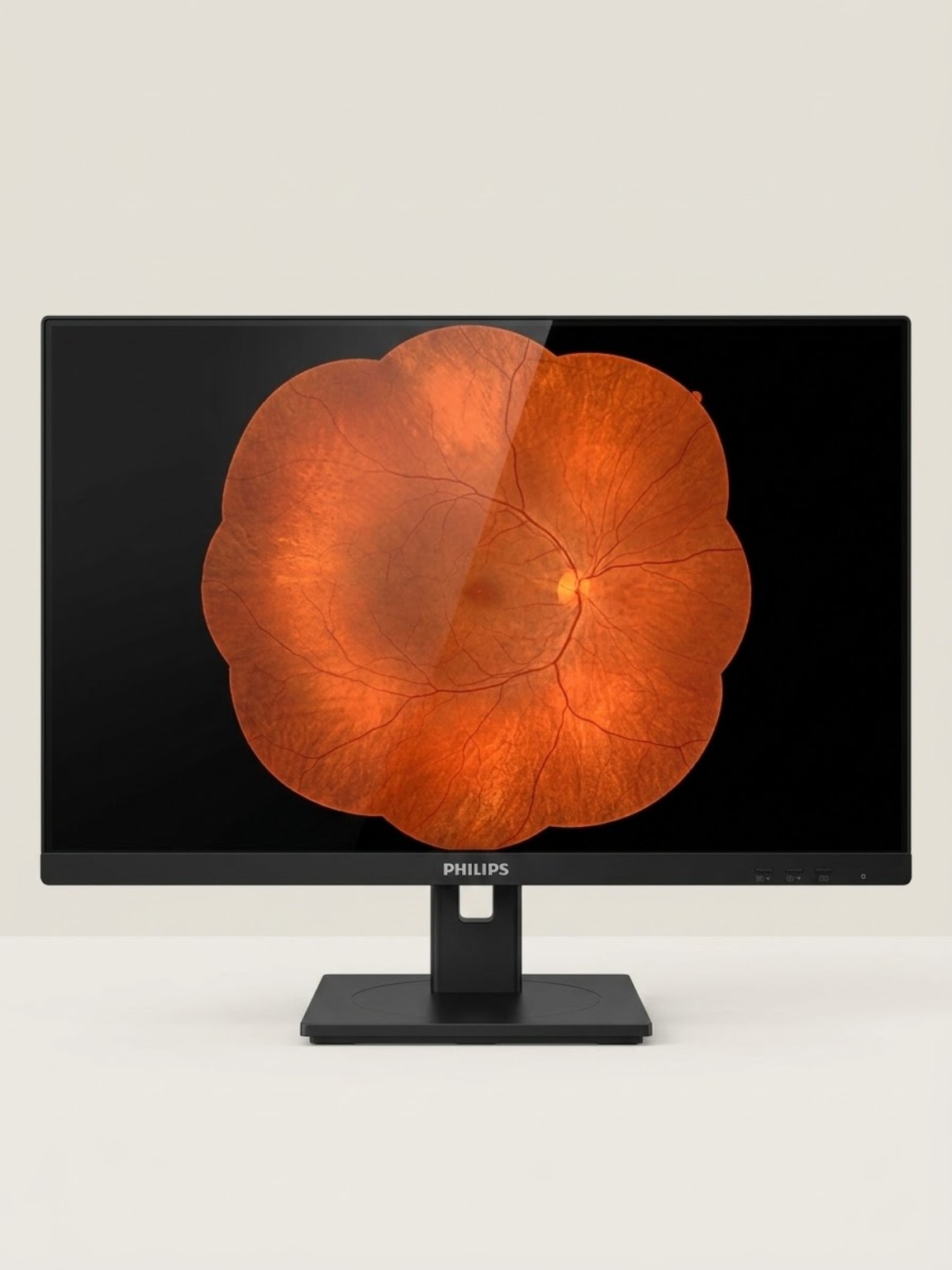
Now with Ultra-Widefield Retinal Imaging £25.00
We can now see more of your retina than ever before with our ultra-widefield retinal imaging system.
Traditional retinal photographs mainly capture the central area at the back of the eye. Ultra-widefield imaging allows us to photograph a much larger area of the retina, including further into the periphery where problems such as retinal holes, retinal tears and other peripheral retinal changes may occur.
Seeing flashes or new floaters?
A sudden onset of flashing lights, new floaters, a shower of spots, or a shadow or curtain across your vision can sometimes be associated with a retinal tear or retinal detachment.
If you develop these symptoms, you should have your eyes assessed urgently.
Our ultra-widefield imaging can be particularly valuable during this type of examination, helping your optometrist examine and document areas of the peripheral retina that can be difficult to photograph using conventional retinal cameras.
When investigating symptoms such as new flashes and floaters, your optometrist may need to use dilating eye drops. These enlarge the pupils and allow a more thorough examination of the peripheral retina.
The drops can make your vision blurred, particularly for close work, and your eyes may be more sensitive to bright light for several hours afterwards.
For this reason, you should avoid driving until your vision has returned to normal. If you are attending because of new flashes or floaters, it is advisable to arrange for someone to bring you to the appointment and take you home afterwards.
New flashes or floaters? Contact us as soon as possible for an urgent assessment.